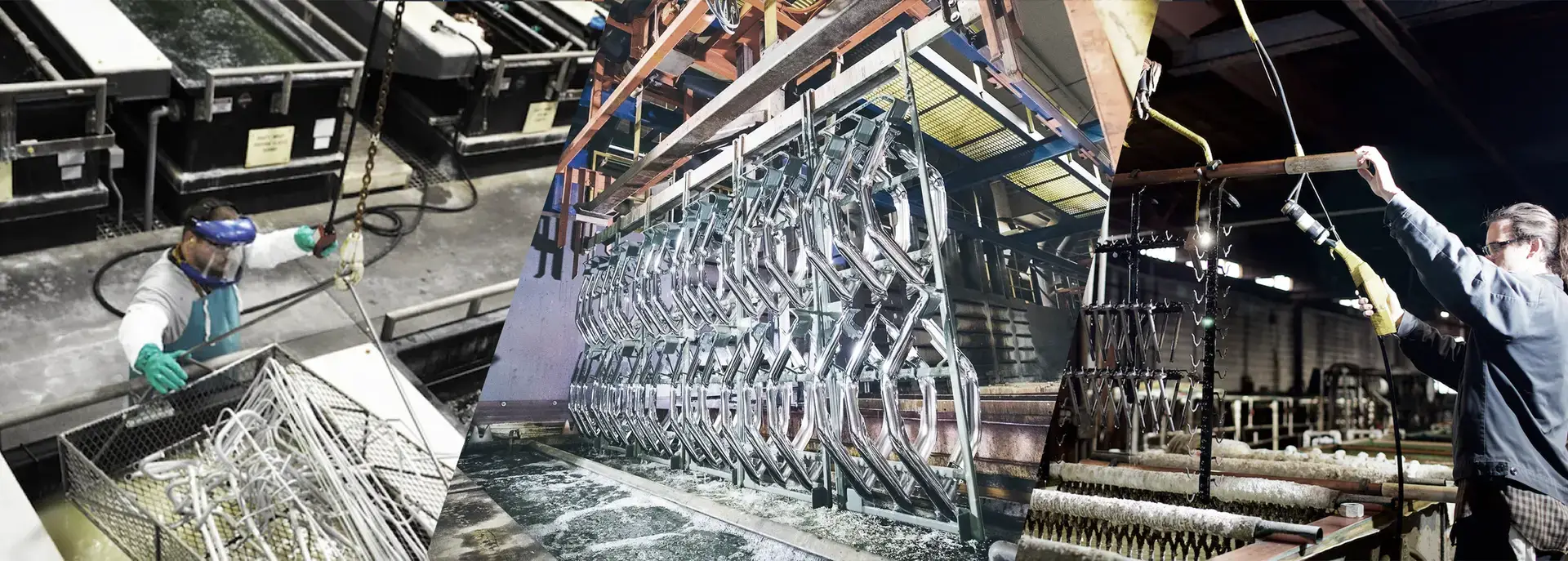
Metal finishing and plating give everyday products their durability, corrosion resistance and conductivity, from car parts and aircraft components to electronics. The baths and rinses that create those finishes also produce wastewater loaded with chromium, nickel and copper, and treating it well is one of the industry’s toughest jobs.
Where the metals come from
- Cleaning and preparation. Degreasing, pickling and activation leach base metals into rinse water.
- Electroplating. Chromium, nickel and copper baths, and the rinses after them, carry the bulk of the metal load.
- Electroless plating. Electroless nickel is another significant nickel source.
- Rinsing. The multiple rinse stages between baths create the largest volume of dilute, metal-bearing water.
- Batch dumps. Spent baths add concentrated slugs of metal to the stream.
The result is a mixed stream of chromium, nickel and copper, often alongside zinc, tin or lead depending on the shop.
Why it matters
- Strict limits. Finishers face some of the tightest multi-metal discharge limits at the municipal, provincial and federal levels.
- Sludge. Conventional precipitation produces large volumes of hazardous sludge that are costly to dewater, haul and dispose of.
- Operating cost. Treatment chemicals, labour and energy add up, and so do fines.
- Variability. Multiple lines and changing production make influent unpredictable.
How Metafix treats it
The RT3 captures copper, chromium, nickel and silver with our patented metallic-exchange media and releases effluent under 1 ppm, safely to drain by gravity. No treatment chemicals are added and no hazardous sludge is produced.
- Handles mixed streams. One system treats the metals a typical plating shop produces.
- Scales with production. 8 L/min (2.1 gal/min) with a 4-column crate, 16 L/min (4.2 gal/min) with a SuperPac-8.
- Rinse control. The RW3 samples up to 8 rinse tanks with pump-less venturi sampling, measures conductivity, pH and temperature, and adds water only when needed, cutting water use, sewer costs and the volume you have to treat.
- Monitored 24/7. Metatrax tracks every system and emails your team when something needs attention.
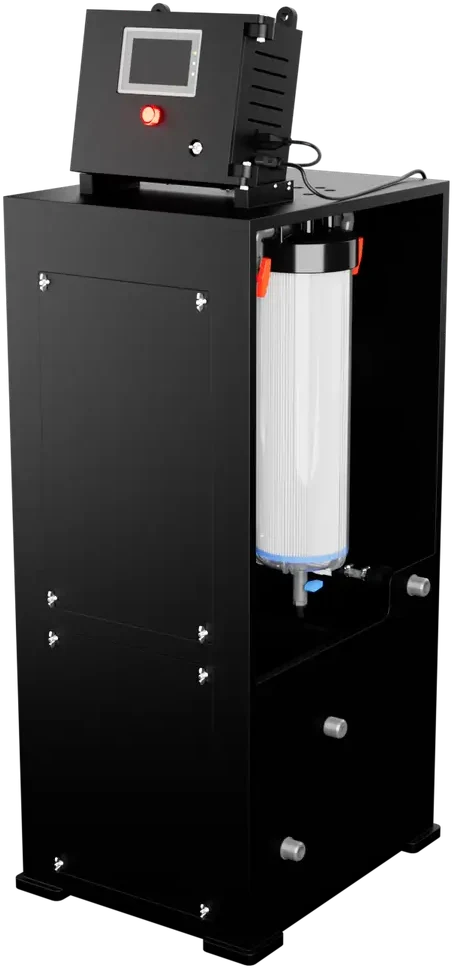
Removes Cu, Cr, Ni and Ag to under 1 ppm, safely to drain, with zero hazardous sludge.
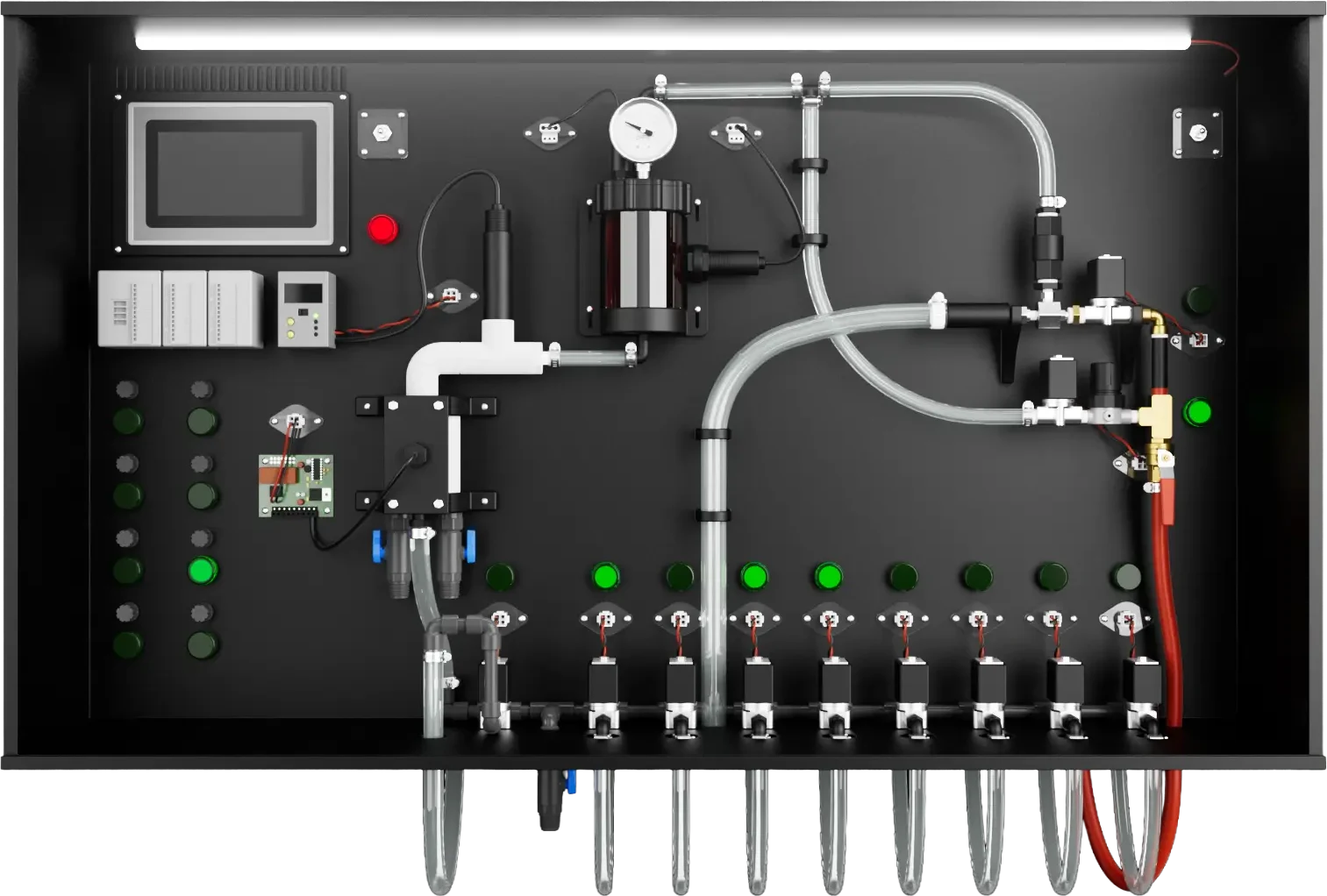
Monitors up to 8 rinse tanks with pump-less venturi sampling and adds water only when needed.
The bottom line
Metal finishing wastewater does not have to mean drums of sludge and constant compliance worry. With 38 years in industrial wastewater and more than 200 units in operation, Metafix helps finishers stay compliant, use less water and cut disposal costs.