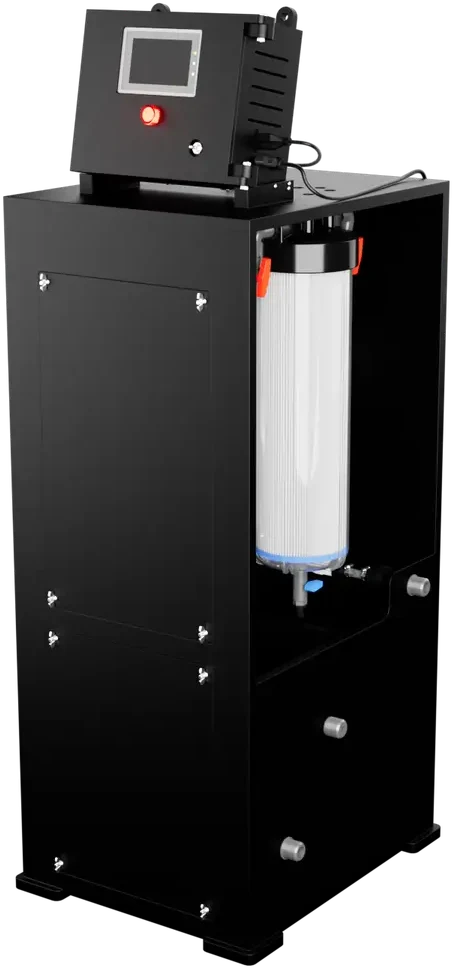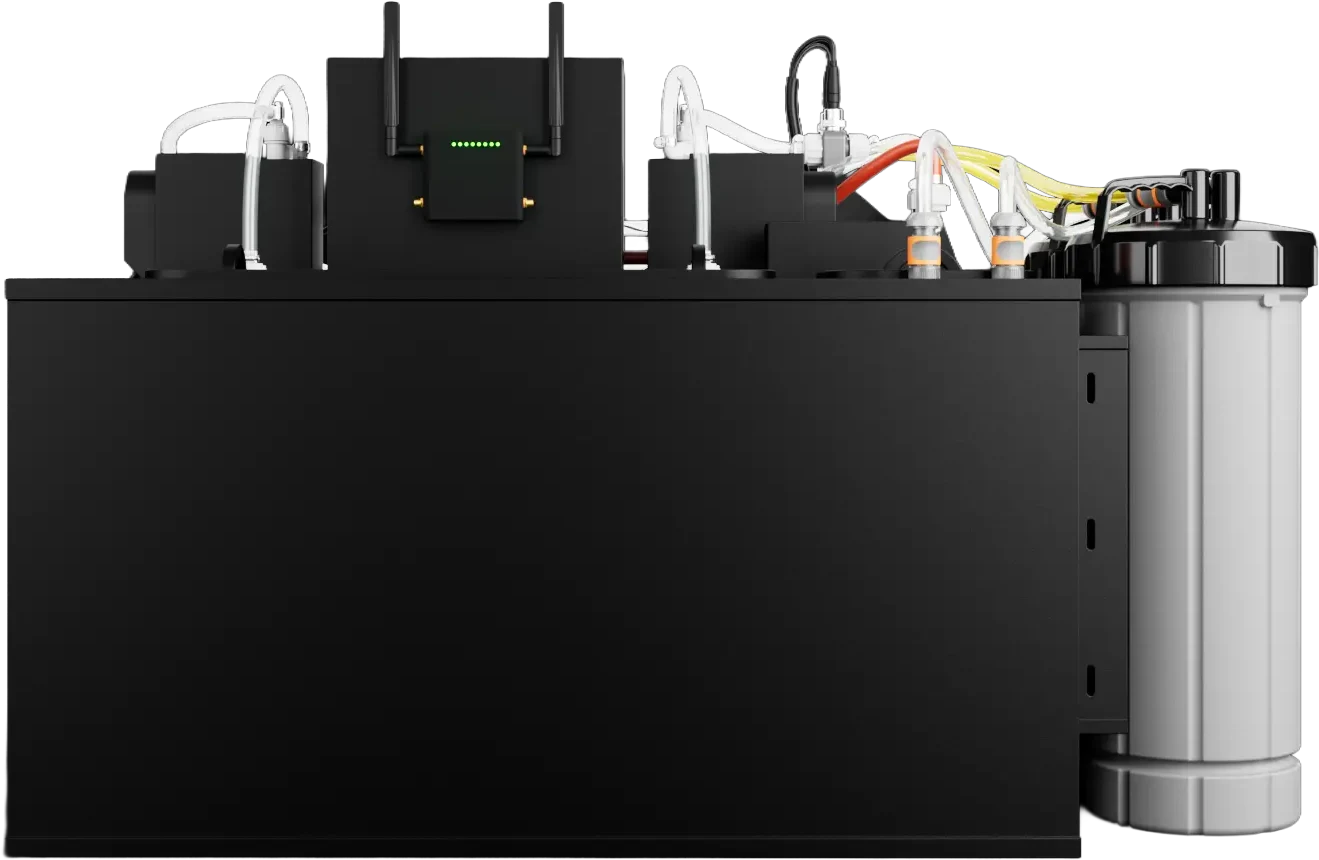
Rinse water management for anodizing, electroplating, metal finishing and etch lines. Monitors pH, conductivity and temperature in up to 8 rinse tanks, with no pumps, and adds water only when the chemistry calls for it.
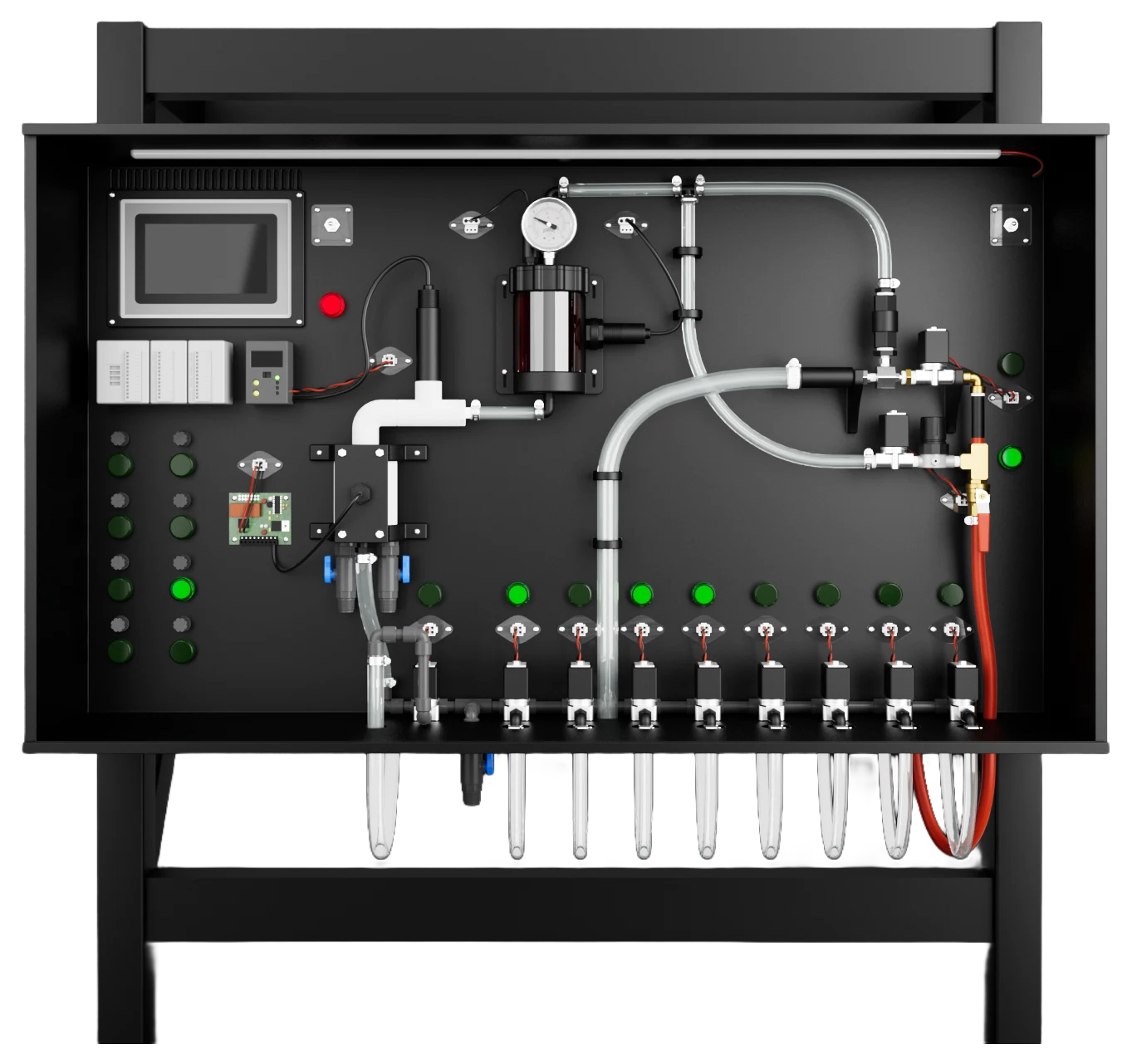
RW3 draws a sample from each rinse tank in turn, measures it in one patented probe cell, and sends water only to the tanks that need it.
Your facility’s existing compressed air creates a vacuum that gently pulls a sample from each rinse tank into the central measurement cell, then returns it with clean air pressure. No pumps to prime, no cross-contamination between baths.
pH, conductivity and temperature are read in one patented probe-centric cell. One sensor set and a single calibration point mean readings compare directly, tank to tank. The sampling interval is set from minutes to hours.
When a tank reads out of spec, RW3 opens its water valve and adds city or DI water until it is back at setpoint, then shuts it off. Water use follows actual drag-in, not a fixed flow.
RW3 works with the way your line already rinses, whether rinse water runs continuously or is held and exchanged in batches.
Pair the RW3 with an RT3 and the displaced rinse water is treated in the same loop, from rinse tank to discharge-ready water. Rinse chemistry stays at setpoint, water goes in only when it is needed, and the effluent stays consistent.
RW3 reads pH, conductivity and temperature in every rinse tank.
City or DI water goes to any tank that reads out of spec, then shuts off.
The displaced rinse water is pumped to a common effluent tank.
Metals are removed to under 1 ppm, with zero sludge, for drain, evaporation or reuse.
Every RW3 reports to Metatrax. Readings from every tank are logged, out-of-spec events trigger email alerts with troubleshooting steps, and water use is tracked over time.
We size the system around your line.
Tank count, running or batch rinses, flow rates and metals.
Footprint, access and utilities.
RW3 units, RT3 crates and SuperPac columns.
Typically 4–6 weeks from PO.